A New Era in the Middle East: Trump Ends the War and Opens the Age of Agreements
November 30 2025•reshdxmb_admin
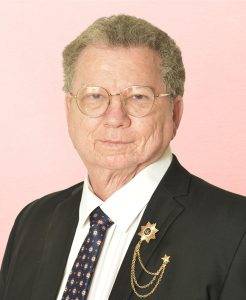
News Feature with Samuel Shay, Entrepreneur and Senior Economic Advisor to the Abraham Accords Treaty, and CEO of Gulf Technologies Systems (GTS)
A historic shift is unfolding across the Middle East as the war in Gaza ends and a new diplomatic horizon opens. In an exclusive interview, Samuel Shay explains how the region is entering an unprecedented era of economic integration and strategic cooperation under President Donald Trump’s renewed vision for stability. Shay, known as one of the key architects shaping the economic framework of the Abraham Accords, describes a transformation that extends far beyond Gaza and redefines the region’s future.
The End of Terror and the Beginning of Reconstruction
Shay emphasizes that the end of the Gaza conflict marks a profound geopolitical turning point. “This is not just the end of a war,” he says. “It is the end of an era defined by terror and instability.” The release of the remaining hostages and the collapse of Hamas’s military structure have created the conditions for a new regional order.
President Trump views Gaza as the starting point for a broader strategy to rebuild the Middle East. Under his plan, what was once a center of confrontation will become a hub of development, global investment and economic renewal.
The New Gaza: From Rubble to Renewal
According to Shay, Trump’s reconstruction plan for Gaza is based on transforming destruction into opportunity. The first stage involves clearing millions of tons of debris, then recycling the materials to build a new marina and possibly an artificial island off the coast, designed for tourism, trade and international employment.
Once the rubble is cleared, construction begins on modern neighborhoods powered by renewable energy, advanced hospitals, high-tech zones and educational institutions. Shay describes the vision of a “New Gaza” as a smart city managed by artificial intelligence and supplied by solar and hydrogen based energy systems.
Israel and the United States will lead the engineering and implementation, with American infrastructure companies executing the construction under joint U.S. and Israeli security supervision.
A New Humanitarian Model: Regional Population Movement
Shay explains one of the most innovative aspects of the plan: a rehabilitation program involving the relocation of part of Gaza’s population to African nations cooperating with the United States. Countries such as Ghana, Gabon, Tanzania and Angola will host Gazan families in new economic communities that offer training, employment and a stable environment.
“This is a humanitarian partnership,” Shay says. “It supports Gaza’s recovery and simultaneously accelerates development in Africa.” The model provides motivated workers for African economies and creates new opportunities supported by American and Gulf investments.
Phase Two: Trump’s Expanded Peace Map
With Gaza stabilized, Trump’s next objective is to expand the Abraham Accords to a broader circle of nations. According to Shay, the first stage includes Saudi Arabia, Syria, Lebanon and Azerbaijan, all of which are coordinating discreetly with Washington and Jerusalem.
The Saudi agreement is the cornerstone of this new peace architecture. It includes advanced defense cooperation and massive economic projects in renewable energy, high tech, agriculture and smart infrastructure.
Syria will join later through a supervised security arrangement that requires severing ties with Iran. Lebanon will receive full rehabilitation of its electricity, water and port systems through an international fund. Azerbaijan will serve as a commercial bridge connecting Asia to Europe.
Turkey Returns to the Center Stage
Shay highlights Trump’s strategic move to re-anchor Turkey as a central partner in the new regional framework. A transcontinental “Great Economic Corridor” is planned, linking Africa, Egypt, Israel, Syria, Turkey and Bulgaria before extending deeper into Europe.
“This corridor unites three continents into one economic flow,” Shay explains. It repositions Turkey as a key gateway between Asia and Europe and reduces its dependency on Russia and Iran.
A New Horizon of Regional Integration
Shay describes Trump’s ambition to expand the peace framework to Pakistan, Malaysia, Indonesia and possibly Afghanistan. Nations will join not through ideology but through clear economic incentives such as investment, employment and trade.
The final goal is a vast stability bloc connecting East Asia, the Gulf, Africa and Europe under American security and diplomatic leadership.
The Next Front: Iran
Shay acknowledges that Iran is Trump’s most complex challenge. Just as Gaza was dismantled as a militant stronghold, Iran is seen as the last major obstacle to regional stability. A coalition of the United States, Saudi Arabia, Turkey and Israel is being formed to counter Iranian influence using sanctions and, if required, precise military action.
“Iran must decide if it joins the economic table or continues toward isolation,” Shay says.
Economy, Technology and Peace: The New Engines of the Region
Trump’s model for peace places economics at the center. According to Shay, massive investments are planned in artificial intelligence, renewable energy, precision agriculture and smart transportation. American, Saudi, Emirati and Israeli companies are preparing to establish technology parks, research hubs and agricultural innovation centers from Haifa Bay to Oman.
These projects are expected to generate millions of jobs and propel the Middle East into a new global economic role.
The Infrastructure Revolution
Shay outlines the “backbone” of Trump’s initiative: an integrated transportation network connecting the region through highways, railways and subterranean tunnels.
A central highway will connect Egypt to Israel and extend north through Syria and Turkey into Europe. A regional high speed railway will connect Saudi Arabia, Jordan and Israel, with extensions to Kuwait, Bahrain, Qatar, the UAE and Oman.
South Yemen will join the Abraham Accords, gaining new ports, tunnels and coastal infrastructure that link the Red Sea to the Indian Ocean.
A cutting edge tunnel network will support trucks, trains and autonomous vehicles, powered by renewable energy and monitored by real time AI systems.
Trump as the Architect of a New Era
Shay concludes that President Trump is not only ending conflicts; he is reshaping the entire region. Under his leadership, American foreign policy is evolving into a driver of economic growth, social development and international cooperation.
“Trump is building a new reality for peoples and nations that fought for generations,” Shay says. “This is more than diplomacy. This is a transformation in the concept of humanity itself.”
Shay’s interview presents a future where the Middle East, Africa and Asia merge into a unified economic space powered by trade, technology and stability.


